

Sens.ai Introduces First Functional EEG-Based Brain Age Clock Validated at MRI-Grade Accuracy

Sens.ai In Clinic Measuring BrainYears™
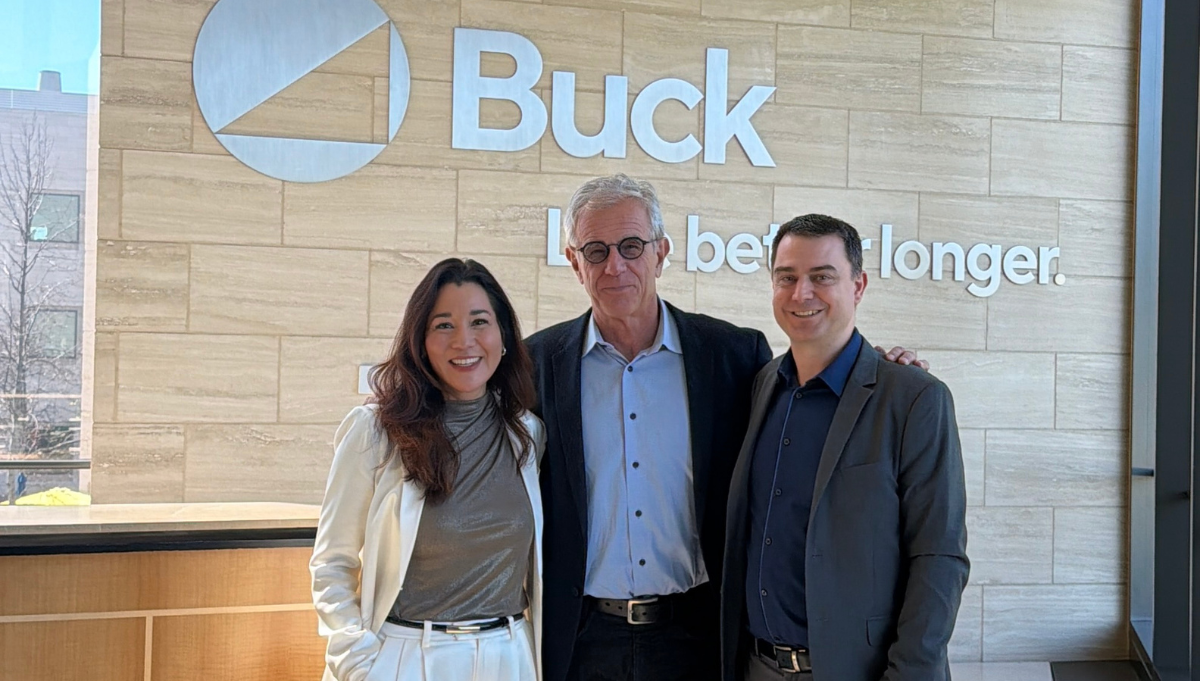
Paola Telfer - Dr. Eric Verdin - Corey Julihn at the Buck Institute for Research on Aging
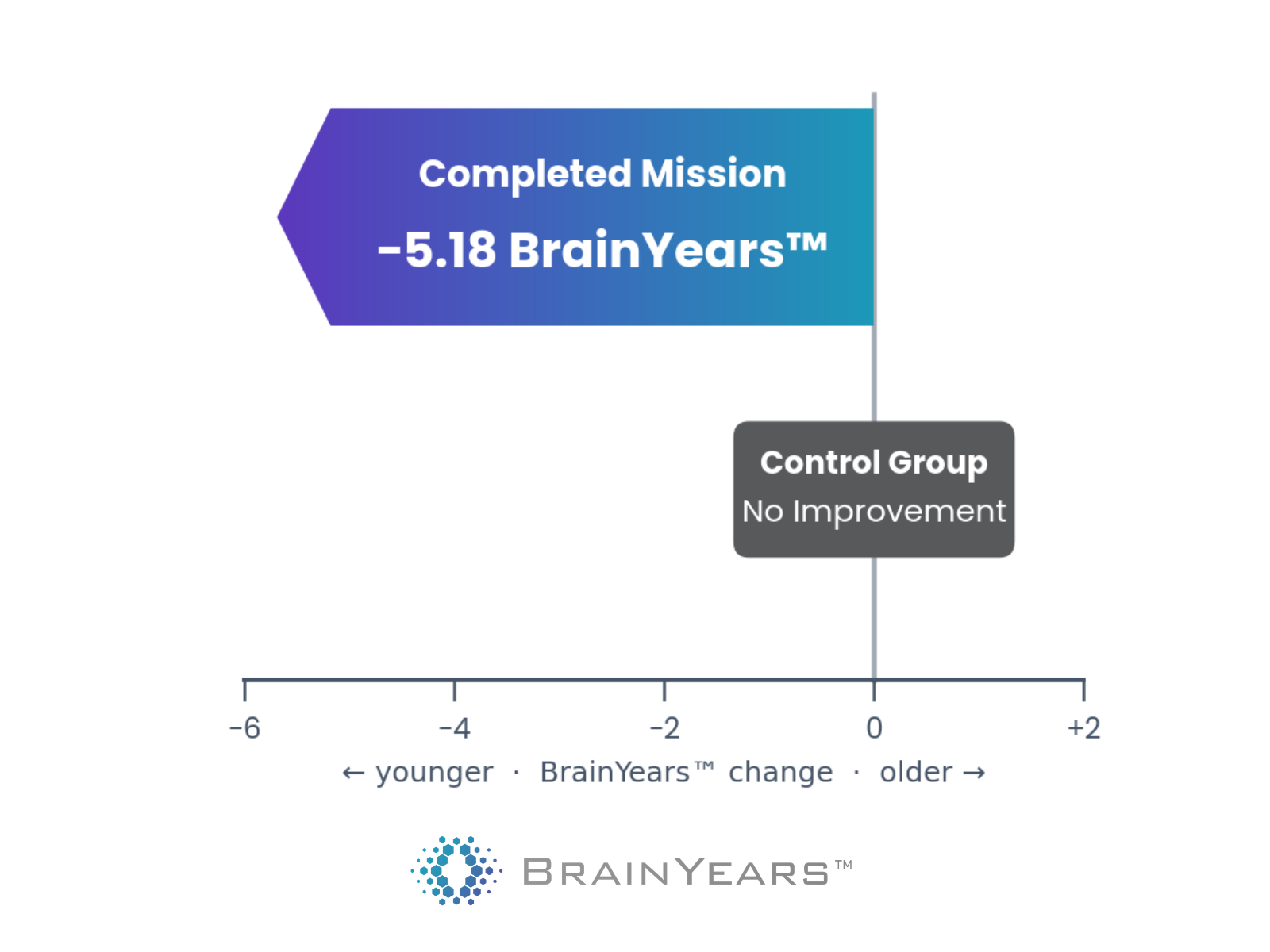
BrainYears™ Improvement with Sens.ai
Pivotal study co-authored by researchers at the Buck Institute and Sens.ai, shows participants improved their brain age by an average of 5.18 years in 56 days.
It’s the first validated, EEG-based biological clock designed to measure and improve functional brain age. The study demonstrates that participants using Sens.ai decreased their brain age by an average of 5.18 years over 56 days, whereas the control group showed +0.07 years (essentially zero). Additionally, 85% of participants showed measurable improvement. These changes reflect improvements in functional brain measures — how the brain performs — rather than structural reversal. The study included 637 participants for model development and 28 participants in a structured intervention program, with a 22-person comparison group.
The model was built on 643 EEG-derived biomarkers captured through the Sens.ai headset, achieving a predictive accuracy of MRI functional brain imaging. However, while MRI captures structural decline after the fact, BrainYears™ measures brain function upstream of anatomical change. Hence, it quantifies functional brain age that may be younger or older than chronological age, and tracks how that trajectory shifts over time. Additionally, unlike MRI, the Sens.ai headset is portable, cost effective, non-invasive, and designed for repeated clinical use, making longitudinal brain age tracking viable at scale for the first time.
"There are clocks based on blood markers, but they won't tell you how well you're thinking," said Dr. Eric Verdin, President and CEO of the Buck Institute. "Adding a functional dimension — one that is objective and can be followed over time — is where the field needs to go. When we ran the data, BrainYears™ turned out to be one of the best clocks ever generated."
The study comes at a timely moment for aging research and public health. According to a report published by the U.S. Census Bureau, more than 55 million Americans are currently aged 65 or older, and that number is projected to exceed 80 million by 2040. Decades of pharmaceutical investment have failed to produce safe, effective treatments for Alzheimer’s disease and mild cognitive impairment (MCI). BrainYears™ positions a wearable, AI-powered neurotechnology platform as a scalable, non-pharmacological path forward, grounded in the brain’s own measurable signals.
What distinguishes BrainYears™ from existing biological age clocks is its direct integration with intervention. Sens.ai combines EEG neurofeedback, transcranial photobiomodulation (tPBM), and heart rate variability (HRV) biofeedback in a single wearable headset. Plus, an embedded AI layer continuously personalizes both assessment and treatment protocols based on each individual’s longitudinal data. The result is a closed adaptive loop where the same device that measures brain age is the one that works to improve it.
"Sens.ai fills that gap and uniquely connects the measurement directly to an intervention, so you can actually see your brain getting better," said Paola Telfer, CEO of Sens.ai. "BrainYears™ is evidence that we can see the brain's functional age shift — measured, not estimated."
The clinical implications are significant. In addition to over five years of improvement in brain age, participants also showed a 10.2% increase in processing speed, a 7% boost in reaction time, and a 40.6% reduction in errors, which are all objective event-related potential (ERP) measurements (p = 0.03).
The control group showed no improvement across any measure. That underscores that the improvements observed in the intervention group were driven by engagement with the platform, not measurement variability.
"We don't just measure brain age — we demonstrate a measurable improvement through the interventions," said Dr. Verdin. "BrainYears™ takes the uncertainty off the table."
The study was authored by researchers at the Buck Institute for Research on Aging, the University of Copenhagen, and Sens.ai, including Sierra Lore, Corey Julihn, Paola Telfer, Morten Scheibye-Knudsen, and Dr. Eric Verdin. BrainYears™ is available for clinical practice integration from late May 2026. Health professionals interested in offering BrainYears™ assessments to clients can learn more and register at www.brainyears.com.
The full study is available at www.biorxiv.org/content/10.64898/2026.03.26.714124v1
Bailey Johnson
Sens.ai
+1 859-338-1017
bailey@sens.ai
Visit us on social media:
LinkedIn
Instagram
Facebook
Sens.ai Introduces The First Functional Brain Age Clock
Legal Disclaimer:
EIN Presswire provides this news content "as is" without warranty of any kind. We do not accept any responsibility or liability for the accuracy, content, images, videos, licenses, completeness, legality, or reliability of the information contained in this article. If you have any complaints or copyright issues related to this article, kindly contact the author above.
