

After 100 ADU Builds, San Diego Firm Finds Information Gaps - Not Policy - Slow Housing
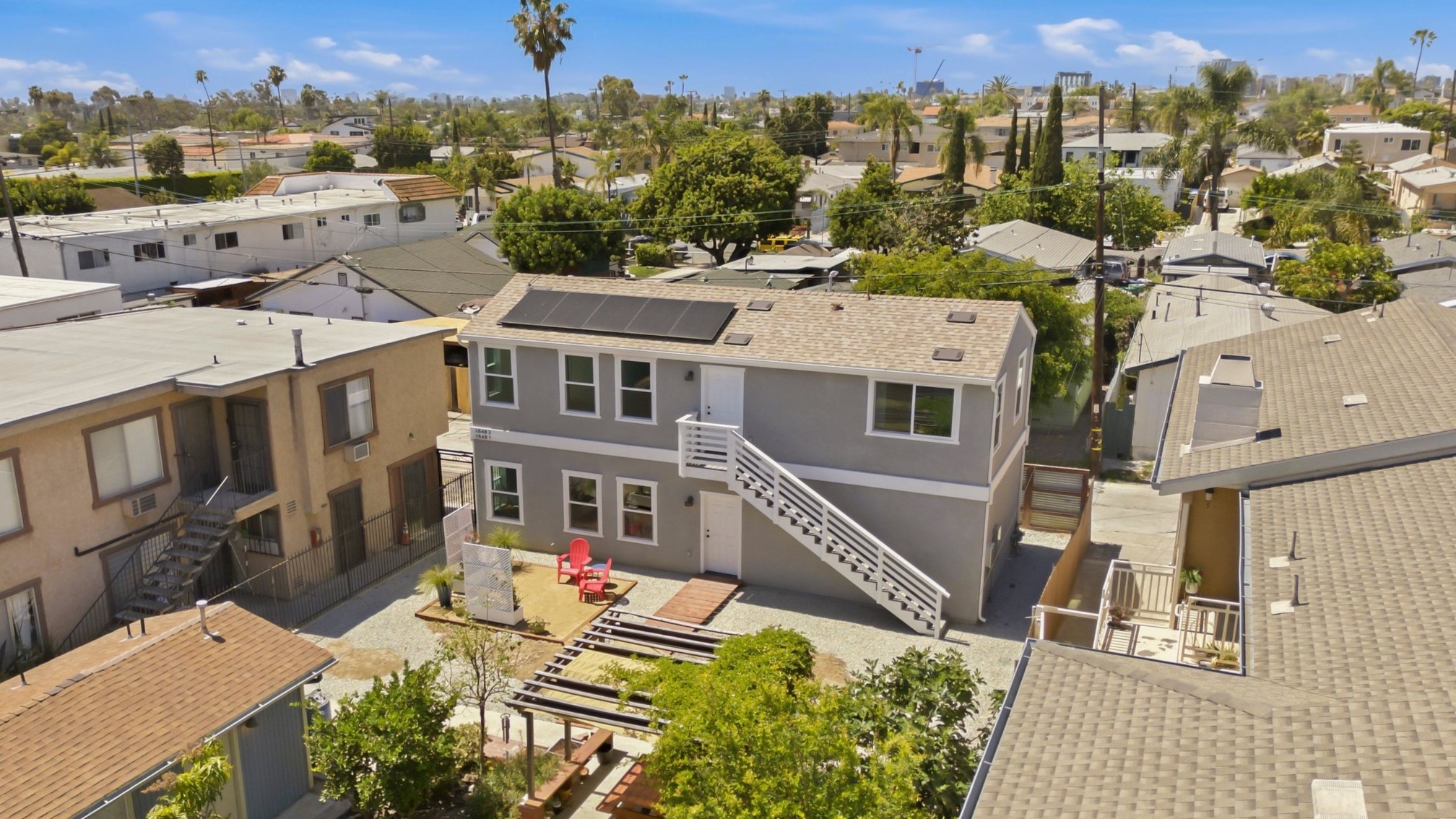
A completed stacked detached ADU in San Diego, demonstrating how backyard housing can increase density within a single footprint.
Despite pro-ADU laws, local variability continues to impact feasibility and cost, while completed projects see strong satisfaction
San Diego-based design-build firm SnapADU has released a field report analyzing its first 100 completed new construction detached ADUs alongside thousands of local homeowner inquiries. The report, “Lessons from 100 Completed Backyard Homes,” examines what actually happens between initial interest and finished construction.
While state law has streamlined approvals on paper, the experience on the ground remains variable. Inconsistent enforcement and limited transparency fuel homeowner uncertainty and delay confident decision-making.
“From a policy standpoint, ADUs are more accessible than ever,” said Whitney Hill, CEO and co-founder of SnapADU. “But what homeowners experience varies widely depending on how those rules are interpreted and enforced at the local level, as well as the project level.”
The report combines data from more than 2,400 ADU inquiries, 100 completed projects, and post-construction feedback from homeowners across San Diego County, offering a detailed look at both demand and delivery.
One of the clearest patterns: projects that begin with realistic, builder-vetted cost assumptions are far more likely to move forward smoothly than those that start with design concepts or incomplete pricing.
“Many homeowners begin with rough estimates or online ranges that don’t reflect their actual site or scope,” Hill said. “When real ADU costs emerge later during permitting, it often leads to redesign, delays, or stalled projects.”
“From a real estate perspective, demand for ADUs is strong, but many homeowners underestimate how important upfront clarity is,” says Sherry Chen, a real estate agent with Kappel Realty Group in San Diego who specializes in homes with ADUs. “Projects that start with realistic expectations around cost and execution tend to move forward much more confidently.”
Among the report's key findings:
High Completion Rates Are Not Typical: While many homeowners begin the process, far fewer finish. In San Diego, roughly one-third of ADU plans submitted to the jurisdiction between 2022-2023 reached build completion by 2025. In contrast, 85% of SnapADU’s submitted projects were built in that timeframe.
Deliberation Gap: Nearly 40% of homeowners took more than a year to decide to move forward with their ADU project. Over half of homeowners cited overall cost as their biggest hesitation before building.
Enforcement Drives Outcomes: Local interpretation of state ADU laws continues to introduce variability in ADU feasibility, costs, and timelines.
Strong End Results: 90% of homeowners said their ADU met or exceeded expectations, with that figure reaching 100% among those further removed from completion. No surveyed homeowners said they regretted building their ADU. The most common feedback was a wish to have started sooner.
The report arrives as ADUs continue to play an expanding role in California’s housing strategy, particularly for multigenerational living and small-scale rental supply. While legislative progress has been significant, SnapADU’s findings highlight a gap between intent and execution.
“The opportunity is there,” Hill added. “What’s missing is consistency and clarity in how these projects move from approval to reality.”
Hill also co-chairs the Responsible ADU Committee of the Building Industry Association of San Diego, where she is involved in ongoing industry efforts to improve consistency in how ADU rules are applied. Most recently, she helped convene a regional panel on ADU fire requirements, bringing together builders, fire officials, and city staff to discuss how interpretation of fire-related rules affects project feasibility, cost, and predictability.
The full report is available here: Detached ADUs in San Diego (2026)-Lessons from 100 Completed Backyard Homes.
About SnapADU
SnapADU is a San Diego–based design-build firm focused exclusively on detached new construction accessory dwelling units. Since 2020, the company has completed over 100 ADUs across San Diego County, managing design, permitting, and construction in-house to provide homeowners with clear pricing and predictable outcomes. Learn more at snapadu.com.
Whitney Hill
SnapADU
+1 760-259-2614
email us here
Visit us on social media:
YouTube
LinkedIn
Instagram
Facebook
Other
Legal Disclaimer:
EIN Presswire provides this news content "as is" without warranty of any kind. We do not accept any responsibility or liability for the accuracy, content, images, videos, licenses, completeness, legality, or reliability of the information contained in this article. If you have any complaints or copyright issues related to this article, kindly contact the author above.
